
Most weatherboard homes should be repainted every 7-10 years, but the real answer depends on several factors: the quality of the paint system applied, how well the surfaces were prepared, how much weather exposure the home receives, and how consistently maintenance has been carried out in the years between full repaints.
What we know from painting weatherboard homes across Geelong and the Surf Coast is this – the homeowners who stay on top of the condition of their paintwork spend far less over the long run. Repainting before a coating fails protects the timber beneath from moisture damage and rot, which is where real repair costs begin. Our Geelong Painters regularly inspect weatherboard homes and help homeowners decide whether maintenance or a full repaint is the best long-term option.
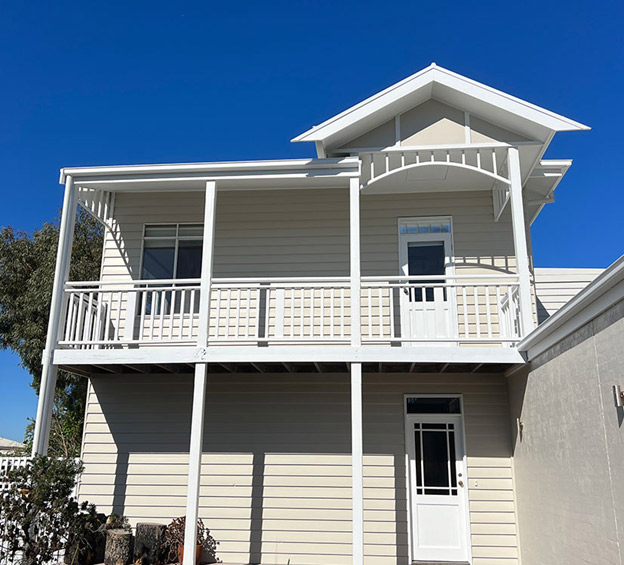
What's the Average Repainting Timeframe for Weatherboards?
For a well-prepared weatherboard home painted with a quality three-coat acrylic system, you can reasonably expect 7-10 years before a full repaint is required. Homes painted with older oil-based systems tend to have a shorter window – typically 4-6 years before cracking and peeling become visible.
In our experience, the 7-10 year figure holds up for homes in sheltered, low-exposure positions where preparation was thorough and premium paint was used. The figure contracts quickly for homes in exposed coastal positions or where a previous repaint was done over inadequate preparation.
One of the most common mistakes we see is homeowners using the 10-year mark as a hard rule – regardless of the condition of their paintwork, their location, or the standard of the previous job. The number is a guide. The real indicator is what the paint is telling you.
Why Some Weatherboard Homes Need Repainting Sooner
Getting the timing right matters as much as the paint system itself – see our full breakdown of the best time of year to schedule exterior painting in Geelong for a season-by-season guide. Several factors can cut a paint system’s lifespan well short of the expected 7–10 years:
Poor surface preparation
If the previous job was done over chalky, peeling, or inadequately cleaned surfaces, the new paint has no solid bond to the substrate. We often see homes that were repainted 3–4 years ago that are already showing failure - almost always because the prep work wasn't done properly.
Budget paint products
Lower-grade paints contain less binder and fewer UV-protective pigments. They chalk and fade faster, and once they begin to degrade, they take the timber with them.
North- and west-facing walls
Sun exposure is the single biggest driver of early paint failure. Walls receiving direct afternoon sun can deteriorate significantly faster than shaded elevations on the same home.
Proximity to the coast
Salt-laden air is highly corrosive to exterior coatings. Homes within 1–2 km of the ocean along the Surf Coast - from Torquay through to Aireys Inlet - face more aggressive conditions than homes further inland around Geelong's eastern suburbs.
Untreated minor damage
Chips, cracks around windows, and failed caulking left unattended allow moisture into the timber. What begins as a small repair can escalate to timber rot and structural work if ignored.
Why Other Weatherboard Homes Last Longer
A thorough preparation process
When surfaces are properly cleaned, all loose and chalky paint is removed, bare timber is spot-primed, and gaps are sealed before painting begins, the finished system bonds far better and lasts significantly longer.
Premium paint systems
Products like Dulux Weathershield and Haymes Solashield are engineered for Australian exterior conditions. They carry higher levels of UV-resistant pigments and flexible acrylic binders that move with the timber through temperature changes rather than cracking.
Annual maintenance washes
Homes that are washed down once a year to remove dirt, salt deposits, and mould spores consistently show less paint degradation over time. This is particularly important for homes near the bay and coastline where salt accumulation is ongoing.
Protected positions
A home with generous eaves, established tree cover, and walls not directly facing the afternoon sun will simply retain its paintwork longer than an exposed coastal property.
How Geelong's Coastal Climate Affects Repainting Frequency
The Geelong region presents a specific set of environmental challenges for exterior paint. The combination of harsh UV from clear summer skies, strong wind exposure – particularly along the Bellarine Peninsula and Surf Coast – and salt-laden air from Port Phillip Bay and Bass Strait creates conditions that are harder on exterior coatings than most parts of inland Victoria.
We often see a meaningful difference in paint lifespan between homes in more sheltered suburbs like Highton or Newtown and homes in directly coastal locations like Jan Juc, Torquay, or Aireys Inlet. Coastal homes exposed to prevailing south-westerly winds can see their paintwork degrade noticeably faster – particularly on southern and western elevations.
For Geelong and Surf Coast homeowners, we generally recommend working towards the lower end of the 7-10 year range rather than the upper end, and conducting annual visual inspections of the exterior, paying particular attention to weatherboards facing the prevailing weather.
How to Tell It's Time to Repaint Your Weatherboard Home
Rather than relying on the calendar alone, the condition of the paint is the most reliable guide. These are the signs we look for when assessing a weatherboard home:
Chalking
Run your hand along the surface - if a chalky residue comes off on your palm, the paint binder is breaking down. This is a reliable early warning that the system is approaching the end of its life.
Peeling or flaking
Once paint begins to lift from the surface, moisture is finding its way beneath the film. Repainting at this point protects the timber; waiting allows the damage to worsen.
Cracking along weatherboard joins
Gaps around windows, door frames, and between boards allow water ingress. These should be re-caulked as part of regular maintenance, but widespread cracking is a sign a full repaint is due.
Fading or colour loss
Significant colour change, particularly on sun-exposed walls, indicates UV degradation of the paint film.
Mould or mildew growth
Common on south-facing walls and in shaded areas, mould growth on painted surfaces often signals that the paint's mould-resistant properties have been exhausted.
Soft or spongy timber
If any weatherboards feel soft to the touch, moisture has already penetrated through the paint. This requires timber repairs before any repainting can take place.
Does Waiting Longer to Repaint Save Money?
How to Maximise the Life of Your Existing Paintwork
If your weatherboard home has been repainted within the last few years and the system is still in good condition, there are practical steps you can take to extend its lifespan:
Wash the exterior annually
Use a mild detergent solution and a soft brush or low-pressure wash. This removes salt deposits, dirt, and mould spores before they degrade the paint film. Pay particular attention to eaves, south-facing walls, and areas around downpipes.
Attend to minor damage promptly
Small chips, cracks, and failed caulking are inexpensive to repair when caught early. Left unattended, they become entry points for moisture.
Inspect after severe weather
Hail, strong winds, and heavy rain can cause localised damage to paintwork. A post-storm inspection allows you to address damage before it becomes a larger issue.
Keep vegetation clear of boards
Shrubs and climbing plants that contact weatherboards hold moisture against the surface and accelerate paint degradation and timber rot.
Getting an Honest Assessment of Your Weatherboard Home
If you’re unsure whether your weatherboard home is due for a repaint, the most useful step is a professional inspection. Our painters regularly assess homes across the region and provide straightforward advice on whether a full repaint is needed, whether targeted maintenance can extend the life of the existing system, or whether there are underlying timber issues that need to be addressed first. If you’re planning an exterior repaint, our Exterior Painters Geelong team can provide honest recommendations and a detailed written quote tailored to your home’s condition.
Fairhaven Painting works across Geelong, the Surf Coast, and the Bellarine Peninsula. We’ve inspected and painted weatherboard homes across a wide range of conditions from well-maintained Federation homes in Newtown and Highton to heavily salt-exposed coastal properties in Torquay and Aireys Inlet and we’re well-placed to give you an accurate picture of where your home sits.
Frequently Asked Questions
How often should a weatherboard house be repainted?
Most weatherboard homes need a full exterior repaint every 7–10 years, depending on the quality of the paint system, the standard of preparation, and the level of weather exposure. Homes in coastal locations or those painted with lower-grade products will typically need repainting sooner.
What makes paint last longer on weatherboard homes?
The two biggest factors are thorough surface preparation and the quality of the paint system used. A properly prepared surface with a three-coat premium acrylic system — such as Dulux Weathershield or Haymes Solarmax — will consistently outlast a job done with budget products or inadequate prep.
How does living near the coast affect how often I need to repaint?
Coastal locations reduce the expected lifespan of exterior paint. Salt-laden air is corrosive to paint films, and UV exposure along the Surf Coast is significant. Homes in Torquay, Jan Juc, Aireys Inlet, and similar locations should plan towards the lower end of the 7–10 year range, and annual maintenance washing becomes especially important.
What are the signs that my weatherboard home needs repainting?
Key signs include chalking (a powdery residue when you run your hand along the surface), peeling or flaking paint, cracking around joins and windows, significant colour fading, mould or mildew growth, and soft or spongy timber boards. Any of these indicate it’s time for an assessment.
Is it worth delaying a repaint to save money?
Generally, no. A timely repaint — before the paint system fails — involves straightforward preparation and is significantly less expensive than a repaint deferred until extensive peeling and timber damage have occurred. Waiting typically increases the cost of the job and the extent of repair work required.
How can I extend the life of my weatherboard home’s paint between repaints?
Annual exterior washing, prompt repair of chips and failed caulking, post-storm inspections, and keeping vegetation clear of weatherboards are the most effective maintenance steps. These measures help protect the paint film and the timber beneath, extending the interval between full repaints.