
Bathroom ceiling paint bubbling, peeling or developing brown water stains is a common problem in homes affected by excess moisture, condensation and poor ventilation.
The problem can be particularly frustrating for homeowners around Geelong and the Surf Coast, where coastal conditions, seasonal weather changes and inadequate bathroom ventilation can contribute to moisture-related paint deterioration.
However, applying another coat of paint is not always the answer. If the underlying moisture problem remains unresolved, or the ceiling has not been properly prepared, the bubbling and peeling may return.
At Fairhaven Painting, we provide professional ceiling painting and restoration services, helping homeowners address deteriorated painted surfaces through appropriate preparation, repairs and suitable coating systems.
In this guide, we explain the common causes of bathroom ceiling paint failure, how to address the problem and when professional ceiling painting may be required.
What Causes Bathroom Ceiling Paint to Bubble or Peel?
Bathroom ceilings are exposed to regular changes in humidity and temperature. Over time, condensation, water leaks and inadequate surface preparation can affect the adhesion of the existing paint.
Here are five common causes.
1. Excessive Moisture and Condensation
Hot showers and baths release moisture into the air. When warm, humid air comes into contact with a cooler ceiling, condensation can form on the surface.
Repeated exposure can gradually weaken the bond between the paint and the ceiling, particularly if the bathroom has limited ventilation.
Common signs include:
- Small bubbles appearing across the ceiling.
- Paint lifting or flaking around the shower area.
- Discoloured patches or water marks.
- Peeling paint that becomes worse after regular shower use.
This can be particularly relevant in coastal homes around the Surf Coast, where environmental moisture and bathroom condensation can add to the demands placed on interior coatings.
2. Poor Bathroom Exhaust Ventilation
An exhaust fan should remove humid bathroom air and discharge it outside the building.
One commonly overlooked problem is an exhaust fan that vents into the roof space rather than outdoors. This simply transfers moisture into the ceiling cavity instead of removing it from the property.
Over time, trapped moisture can contribute to condensation, mould and deterioration of ceiling materials.
Check whether:
- The exhaust fan is working effectively.
- The fan duct connects to an external discharge point.
- The ductwork is intact and properly installed.
- The bathroom has adequate airflow.
- Condensation remains on mirrors and windows long after showering.
Running the fan during showers and afterwards can help reduce moisture accumulation. If the fan is ineffective, a ventilation professional or electrician can assess the installation.
3. Water Leaks Above the Ceiling
Not every bathroom ceiling stain is caused by condensation.
A leaking roof, plumbing connection or pipe above the ceiling can introduce water directly into the plasterboard.
Look for these warning signs:
- Yellow or brown stains.
- Localised bubbling or peeling.
- Damp patches that continue to expand.
- Soft or sagging ceiling material.
- Water marks that appear even when the bathroom is not being used.
If you suspect a leak, have the source investigated and repaired before arranging painting work.
Painting over an active leak will not solve the problem and may conceal more serious damage.
4. Incorrect Paint or Primer Selection
Bathroom ceilings need a coating system that can handle the moisture conditions of the room.
Using ordinary ceiling paint in a consistently humid environment may contribute to premature coating failure, particularly when combined with poor ventilation or inadequate preparation.
For bathroom ceiling projects, the following product categories may be considered:
- Sealer binder: Helps prepare porous or chalky surfaces and improve adhesion.
- Stain-blocking primer: Helps prevent water marks from bleeding through the new coating after the moisture source has been resolved.
- Kitchen and bathroom paint: Designed for interior surfaces exposed to humidity and regular cleaning.
- Ceiling topcoat: Provides the required appearance and finish for the ceiling.
Product selection should depend on the condition of the surface and compatibility between the primer and topcoat.
5. Inadequate Surface Preparation
Even premium paint can fail when applied over a poorly prepared surface.
Common preparation mistakes include:
- Painting over loose or flaking paint.
- Applying paint to a damp ceiling.
- Leaving dust or contamination on the surface.
- Skipping the required primer.
- Failing to repair damaged plasterboard.
- Applying a new coating over an incompatible existing finish.
Proper preparation is essential for achieving an even finish and reducing the likelihood of recurring paint failure.
Can You Paint Over a Bubbling Bathroom Ceiling?
Yes, but the underlying cause of the bubbling must be addressed before repainting.
Applying another coat directly over the damaged paint is unlikely to provide a lasting result.
The correct approach involves identifying the moisture source, assessing the ceiling condition and preparing the surface before applying a new coating.
A typical professional painting process involves:
- Identify the moisture source: Determine whether condensation, plumbing leaks or roof leaks are contributing to the problem.
- Resolve the underlying issue: Repair leaks and address ventilation problems before repainting.
- Inspect the ceiling: Check for loose paint, damaged plasterboard, mould and soft areas.
- Remove failing coatings safely: Only proceed with removal once the substrate has been assessed and asbestos risks have been ruled out where relevant.
- Prepare the surface: Carry out necessary repairs, filling and preparation.
- Apply the correct primer: Select a compatible sealer or stain-blocking product based on the surface condition.
- Apply the ceiling paint: Finish with a coating designed for the room’s moisture exposure.
The number of coats and preparation requirements will depend on the existing ceiling and the products being used.
Important: Check for Asbestos Before Scraping or Sanding Older Ceilings
- Do not scrape, sand, drill or cut the ceiling.
- Do not assume asbestos can be identified by appearance.
- Arrange an assessment or testing by a competent professional.
- If asbestos is confirmed, engage an appropriately licensed asbestos removalist where required.
Coastal Bathroom Moisture: What Homeowners Around the Surf Coast Should Know
Bathrooms in coastal homes can experience additional moisture challenges.
Properties around Fairhaven, Anglesea, Lorne, Torquay and Ocean Grove may be affected by a combination of coastal conditions, seasonal weather changes and limited ventilation.
Holiday homes can face a different issue.
When a property remains closed for several weeks between visits, bathrooms may receive little ventilation. If there is an existing moisture problem, condensation and dampness can remain unnoticed until the owner returns.
Before repainting a coastal bathroom, consider:
- Checking exhaust fan operation and external ventilation.
- Inspecting ceiling corners for mould and discolouration.
- Checking for leaks around plumbing and roof penetrations.
- Allowing damp surfaces to dry before applying new coatings.
- Selecting a coating system suited to the bathroom environment.
A fresh coat of paint may improve the appearance, but controlling moisture is essential for protecting the finished surface.
What Dulux Products Can Be Used for Bathroom Ceiling Repairs?
The right product depends on whether you are dealing with water staining, chalky surfaces, peeling paint or general bathroom humidity.
Fairhaven Painting works with premium paint systems, and Dulux products may be considered for suitable projects.
Here are some product categories and examples to discuss with Kaj before publishing.
| Product category | Potential product | Purpose |
|---|---|---|
| Stain-blocking primer | Dulux PRECISION Ceiling Stain Blocker Spray | Helps block water marks and other stains |
| Sealer binder | Dulux sealer binder range | Prepares suitable porous or chalky surfaces |
| Bathroom topcoat | Dulux Wash&Wear Kitchen & Bathroom | Interior coating for moisture-prone rooms |
| Ceiling topcoat | Dulux ceiling paint range | Provides the final ceiling finish |
Bathroom Ceiling Restoration in Ocean Grove: A Real Project Example
Water damage can leave bathroom and interior ceiling surfaces looking stained, uneven and unsuitable for a straightforward repaint. In these situations, the condition of the existing surface needs to be assessed before deciding on the appropriate restoration and painting work.
Fairhaven Painting has completed a ceiling restoration project in Ocean Grove involving a water-damaged ceiling that required attention before repainting.
The project demonstrates the type of ceiling painting and restoration work that may be needed when water damage affects the appearance and condition of an interior ceiling.
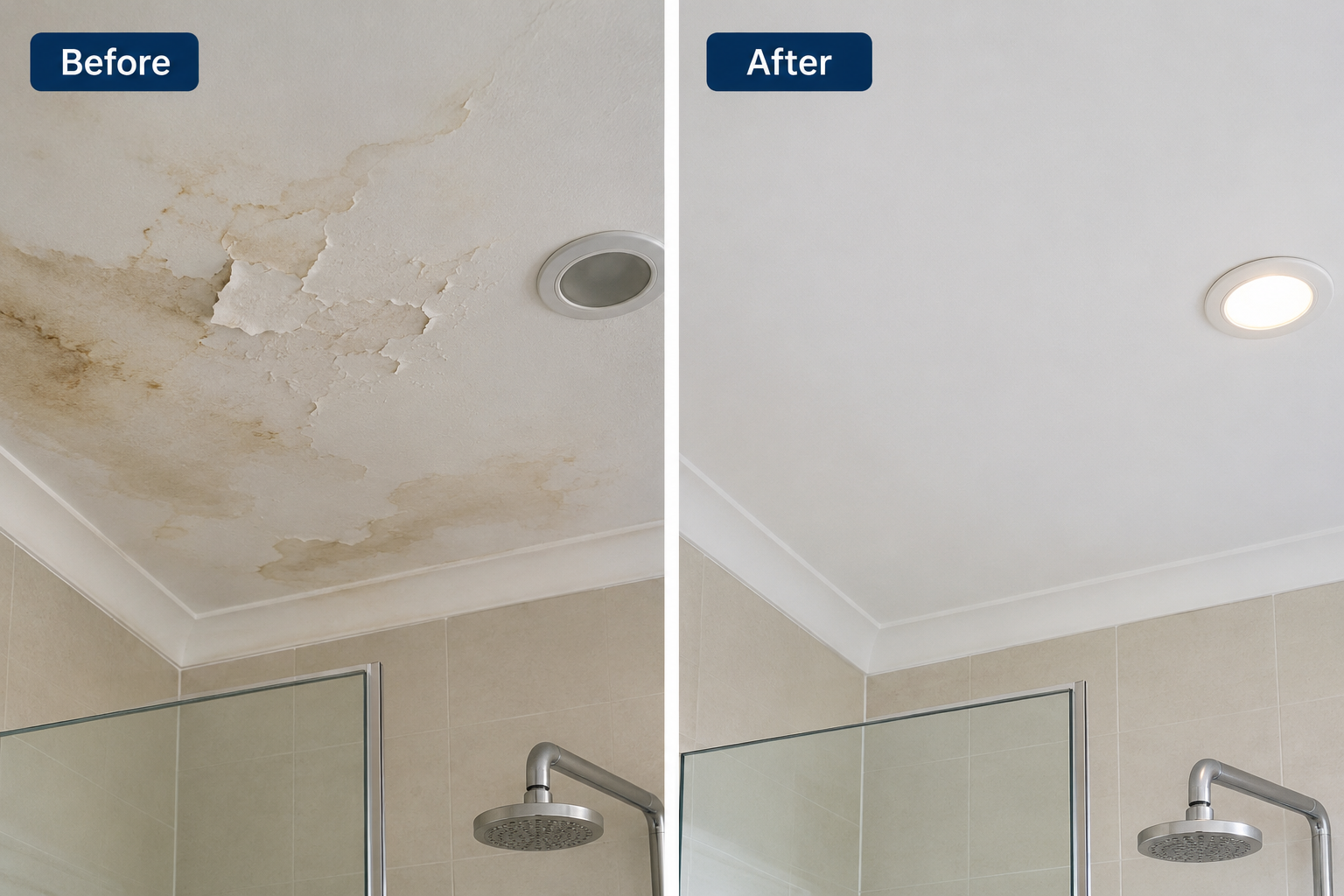
If your bathroom ceiling has bubbling paint, peeling coatings or visible water stains, the right approach will depend on the extent of the damage and whether the underlying moisture issue has been resolved.
Explore our ceiling painting and restoration services to learn more about how Fairhaven Painting can help with damaged and deteriorated ceiling surfaces.
When Should You Repair or Repaint a Bathroom Ceiling?
The right solution depends on how extensively the ceiling has been affected.
| Ceiling condition | Recommended next step |
|---|---|
| Minor surface discolouration | Investigate the cause and assess the surface before repainting |
| Small areas of peeling paint | Identify the cause and assess whether localised preparation is sufficient |
| Yellow or brown water stains | Repair the leak, dry the surface and consider a stain-blocking primer |
| Widespread bubbling | Investigate moisture and assess the existing coating |
| Soft or sagging plasterboard | Arrange professional inspection and necessary repairs |
| Persistent mould growth | Address the moisture source and arrange appropriate mould remediation |
If the ceiling has extensive water damage or deteriorated plasterboard, repainting alone may not be sufficient.
Why Choose Professional Ceiling Painters?
Bathroom ceiling painting requires more than applying a fresh coat of white paint.
The existing coating, surface condition, moisture exposure and preparation requirements all influence the finished result.
Professional painters can assess visible coating failures, identify preparation requirements and recommend an appropriate painting system.
At Fairhaven Painting, our ceiling painting services cover:
- Residential ceiling painting.
- Ceiling surface preparation.
- Repairs and restoration.
- Water-stain treatment and repainting.
- Painting of damaged or peeling ceiling surfaces.
If you need professional help with a damaged bathroom ceiling, explore our ceiling painting services to discuss your requirements.
You can also use our painting cost calculator to get an initial estimate for your painting project. The final price will depend on the ceiling’s size, condition and preparation requirements.
For broader interior painting requirements, visit our interior painting services.
Frequently Asked Questions
Why does bathroom ceiling paint bubble after a shower?
Bathroom ceiling paint can bubble when repeated exposure to condensation affects the adhesion of the existing coating. Poor ventilation, unsuitable paint and inadequate surface preparation can also contribute to the problem.
Can I paint over peeling bathroom ceiling paint?
No. Loose and peeling paint should not simply be covered with another coat. The cause of the failure must be identified, the surface assessed and the damaged coating prepared safely before repainting.
How do I stop bathroom ceiling paint from peeling again?
Address the underlying moisture problem, improve bathroom ventilation, ensure the ceiling is dry and use a compatible primer and bathroom ceiling coating. Correct surface preparation is essential.
Do I need special paint for a bathroom ceiling?
A coating designed for bathrooms or humid interior environments is generally recommended. Product selection should consider moisture exposure, ventilation, surface condition and the manufacturer’s application instructions.
Can I paint over brown water stains on my bathroom ceiling?
Yes, once the source of the water has been repaired and the ceiling is dry. A suitable stain-blocking primer can help prevent the discolouration from showing through the new topcoat.
Can bathroom ceiling paint peel because of poor ventilation?
Yes. Inadequate ventilation allows humid air to remain in the bathroom, increasing condensation on cooler surfaces. An exhaust fan should discharge air outdoors rather than into the roof space.
Should I replace my bathroom ceiling if the paint is bubbling?
Not necessarily. Minor paint failure may only require preparation and repainting. However, soft, sagging or extensively water-damaged plasterboard may need repair or replacement.
Can older bathroom ceilings contain asbestos?
Yes. Asbestos-containing materials were commonly used in Australian homes before 1990 and may be present in older ceiling materials. Do not scrape, sand or drill an unidentified ceiling. Arrange appropriate assessment before disturbing the material.
Need Help with a Bubbling or Peeling Bathroom Ceiling?
Bubbling paint, peeling coatings and brown water stains can make an otherwise well-maintained bathroom look neglected. More importantly, recurring paint damage may indicate an underlying moisture or ventilation problem that needs attention.
The key to a lasting result is identifying the cause of the damage, addressing any underlying issues, preparing the ceiling properly and selecting a coating system suited to the bathroom environment.
Fairhaven Painting provides professional ceiling painting and interior painting services across Geelong, Fairhaven and surrounding Surf Coast communities.
Whether you need a bathroom ceiling repainted, water-damaged surfaces restored or deteriorated ceiling coatings addressed, our team can discuss your requirements and help determine the appropriate painting solution.
Contact Fairhaven Painting today to discuss your ceiling painting requirements and request a free, no-obligation quote.