
Exterior Painters Newtown | Long-Lasting Exterior Painting & Free Quotes
Looking for trusted Exterior Painters Newtown homeowners recommend? Fairhaven Painting restores weatherboard, brick and rendered homes with premium exterior painting, meticulous preparation and durable paint systems designed for Geelong’s climate. Request your free written quote today.
- 10+ years exterior work across Geelong
- Weatherboard & heritage home specialists
- Dulux Weathershield & Haymes Solashield
- Oil-based primer on bare timber - always
- Mould treated before painting, not over it
- Workmanship guarantee on every exterior job
- Fully insured - public liability & workers' comp
- Free on-site quote - written & itemised
Get a Free Quote
Fast response · No obligation · Newtown & surrounds
Why Newtown Homeowners Choose Fairhaven Painting
10+ Years of Painting Experience
With over a decade of experience painting homes across Newtown, we understand the unique challenges posed by local weather conditions. Our expertise ensures a durable, high-quality finish that stands the test of time.
Workmanship Warranty
We stand behind the quality of our work with a workmanship guarantee for added peace of mind. You can feel confident knowing your investment is protected long after the project is completed.
Free Colour Consultation
Choosing the right exterior colours can be overwhelming, which is why we offer expert colour advice. We help you select shades that complement your home's style and enhance its street appeal.
Premium Paint Systems
We use trusted brands such as Dulux and Haymes to deliver superior durability and long-lasting colour retention. Premium paints provide better protection against fading, peeling, and harsh weather conditions.
Thorough Surface Preparation
A lasting paint job starts with proper preparation, including washing, scraping, sanding, repairs, and priming. We take the time to prepare every surface correctly before applying paint.
Fully Insured Professionals
Our team is fully insured and committed to maintaining the highest standards of safety and professionalism. This gives homeowners confidence throughout every stage of the project.
Customer Reviews
We are a small team of highly skilled, qualified painters with experience of up to +10 years.
EXCELLENTTrustindex verifies that the original source of the review is Google. Kaj was so great to deal with and a pleasure to have working for us. He did a super neat job in a timely fashion. We would highly recommend Kaj to anyone looking for someone to do a great job.Posted on GoogleTrustindex verifies that the original source of the review is Google. Highly recommended. Kaj was polite, professional and did an excellent job painting the interior of my housePosted on GoogleTrustindex verifies that the original source of the review is Google. Highly recommend Kaj... very efficient and responsive and great quality workmanshipPosted on GoogleTrustindex verifies that the original source of the review is Google. Kaj did a wonderful paint job for us. Very keenly priced and first class workmanship. Very careful and worked extremely quickly. Can thoroughly recommend. Kaj and his team have recently completed painting a tricky internal stairwell for me. Once again a first rate job, on time and clean. Very satisfied.Posted on GoogleTrustindex verifies that the original source of the review is Google. Kaj and his team did an amazing job at my Fairhaven property. Communication with Kaj was excellent at all times and he assisted with colour choice. He gave me a realistic estimate of when he would be able to start and kept me up-to-date at all times. The quality of work was excellent and it was a pleasure to do business with him. I would definitely recommend Kaj for high-quality painting.Posted on GoogleTrustindex verifies that the original source of the review is Google. Kaj painted all the windows in our house in Fairhaven, fantastic job, and a great guy to deal with.Posted on GoogleTrustindex verifies that the original source of the review is Google. Kuljinder and his team have painted two properties for us and their quality is to a very high standard. Very professional and easy to deal with.Posted on GoogleTrustindex verifies that the original source of the review is Google. Many thanks to the team for a great job , corteous , on time and great attention to detail
Why Exterior Painting in Newtown Demands More Than a Standard Approach
Newtown’s homes face some of Geelong’s toughest weather conditions. Intense UV exposure, seasonal rain, moisture, salt-laden winds and constant temperature changes all take a toll on exterior paint, causing it to fade, crack, peel and deteriorate faster if the wrong products or preparation methods are used.
Every home also presents different challenges. Weatherboard homes require flexible coatings that move with the timber, while brick and rendered surfaces need specialised preparation and breathable paint systems to ensure long-lasting protection.
At Fairhaven Painting, we don’t believe in a one-size-fits-all approach. Every exterior painting project begins with a thorough assessment of your home’s condition, allowing us to recommend the most suitable preparation methods, premium paint systems and application techniques for a finish that protects your home and enhances its street appeal for years to come.
Looking for complete painting services? Explore our Painters Newtown services for residential and exterior painting across Newtown and surrounding Geelong suburbs.

UV Intensity on North & West Faces
Geelong's summer sun is relentless on north and west-facing walls. Cheaper paint fades, chalks, and loses adhesion in 3–4 years. We specify UV-stable systems and the right sheen for each exposure level.

Westerly Winds & Salt Exposure
Even homes well inland from the bay receive wind-driven salt and moisture via Geelong's prevailing westerlies. West-facing surfaces deteriorate faster and need higher-build, weather-resistant coatings.

Mould on South-Facing Walls
South walls and shaded eaves in Geelong's wet winters become mould sites if not properly protected. Painting over active mould guarantees its return. We treat, seal, and then apply mould-resistant systems.

Timber Movement in Weatherboards
Seasonal expansion and contraction in old weatherboards cracks rigid paint at board edges, joins, and window surrounds. Flexible primer and topcoat systems are essential - not optional - on timber homes.

Heritage Detail on Older Homes
Decorative eaves, bullnose verandahs, and heritage trims on Newtown's older homes require careful brush technique, proper masking, and colour separation - work that spray-only painters regularly skip.
Exterior Surfaces We Paint in Newtown
Every exterior surface requires different preparation, primers and coatings to achieve a durable finish. That’s why Fairhaven Painting tailors every exterior painting project to the materials and condition of your home rather than using a one-size-fits-all approach.

Timber weatherboard is the most demanding exterior surface in Geelong. Boards expand in summer heat and contract in winter cold - a cycle that stresses paint films at every gap, join, and nail hole. Proper preparation means scraping all loose paint, sanding edges, filling gaps with flexible exterior caulk, and applying oil-based primer to any bare timber before a single topcoat goes on.
Preparing weatherboards correctly is one of the biggest factors in how long your new paintwork will last. That's why we never compromise on preparation before painting begins.

Brick homes require specialist preparation and breathable masonry coatings to achieve a long-lasting finish without trapping moisture. We assess every surface before recommending the most suitable coating system for your home.
Rendered homes are common throughout Manifold Heights and parts of Newtown. Render that's chalky, cracked, or powdering needs to be assessed before any coating is applied. Painting over failing render doesn't fix it - it hides it temporarily. We identify cracks, assess whether they're structural or surface, patch as required, and apply the correct primer before topcoating.
On sound render, a quality elastomeric or flexible exterior coating provides excellent coverage and bridges minor hairline cracks that inevitably develop over time.

Fascias, eaves, and soffits are among the most overlooked surfaces on any home - and among the first to show deterioration. On weatherboard homes especially, the eave/soffit junction is a common entry point for moisture. Timber fascias that aren't properly primed and sealed will rot from the inside, no matter how good the topcoat looks from the street.
We paint all eave and fascia surfaces as part of a full exterior repaint, treating each piece of timber correctly rather than applying a quick coat over whatever's there.
Newtown's heritage homes deserve careful preparation and attention to detail. From decorative timberwork to ornate verandahs, Fairhaven Painting preserves the character of older homes while delivering premium exterior finishes designed to last.

Timber fences take the full force of Geelong's UV and rain. Without regular maintenance they grey, split, and deteriorate. A well-prepared fence painted with the right exterior system looks great and lasts significantly longer than one that receives a quick coat over dirty timber.
Rendered or brick retaining walls are treated the same as any masonry exterior surface - properly cleaned, primed at bare areas, and coated with a breathable masonry paint.
Exterior Painting Costs in Newtown - 2026
| Project Type | Scope | Typical Range | Includes |
|---|---|---|---|
| Weatherboard Exterior – Standard | 3–4 bed single storey, sound condition | $5,000 – $8,500 | Pressure wash, scrape, prime, caulk, 2 topcoats, fascias & trims |
| Weatherboard Exterior – Prep-Heavy | 3–4 bed with significant peeling or bare timber | $7,000 – $12,000 | Extended scraping, full prime on bare areas, caulk all joins, 2 topcoats |
| Heritage Weatherboard | Edwardian/Victorian with decorative eaves, verandah detail | $8,000 – $16,000+ | Full prep, heritage palette, brush detail on eaves and trims, 2–3 coats |
| Brick Veneer Exterior | 3–4 bed single storey brick | $3,500 – $7,000 | Pressure wash, masonry sealer, 2 topcoats on walls, trims, fascias |
| Rendered Home Exterior | 3–4 bed rendered single storey | $4,500 – $8,000 | Wash, crack repair, penetrating primer, 2 elastomeric topcoats |
| Fascias, Eaves & Trims Only | Without full repaint of walls | $1,200 – $3,500 | Preparation, prime bare timber, 2 coats on fascias, soffits, bargeboards |
| Fence Painting | Standard timber paling fence | $800 – $2,500 | Preparation, 1–2 coats of exterior system |
| Pre-Sale Exterior Refresh | Targeted refresh to lift street appeal before sale | $2,500 – $6,000 | Focus on front elevation, fence, trims – fast turnaround |
⚠ All ranges are indicative. Final pricing depends on surface condition, height, extent of prep required, number of colours, and access. Two-storey homes, scaffolding requirements, and extensive timber repair will be costed separately. Contact us for a free written quote.
The Paint Systems We Use and Why They Matter
We believe a long-lasting exterior paint job depends on two things: meticulous preparation and premium paint systems. That’s why Fairhaven Painting uses trusted Australian brands selected to suit your home’s exterior, surface type and exposure to Geelong’s weather.
Dulux Weathershield
Our preferred choice for weatherboard homes, providing outstanding UV protection, excellent colour retention and a flexible finish that moves with the timber to reduce cracking and peeling.
Haymes Solashield
A premium exterior coating designed for brick and rendered homes, offering excellent weather resistance, mould protection and long-lasting colour in Geelong's changing climate.
Oil-Based Primer
Every successful paint job starts with the right foundation. We use specialist primers suited to timber, brick, render and metal surfaces to improve adhesion, maximise durability and help your new paint last longer.
Exterior Gap Sealing
Before painting, we seal gaps around weatherboards, windows and trims using premium flexible sealants. This helps prevent moisture penetration, improves energy efficiency and creates a cleaner, more professional finish.
Mould Treatment
Rather than painting over mould, we treat affected areas properly before painting begins. This helps prevent mould from returning and ensures a cleaner, healthier and longer-lasting exterior finish.
Our Exterior Painting Preparation Process
Preparation is where exterior paint jobs succeed or fail. A budget painter spends one day on a job that needs three – and the homeowner discovers this two years later when paint starts peeling.
Pressure Wash the Entire Exterior
Every exterior surface is pressure washed to remove chalk, dirt, mould spores, cobwebs, and surface contaminants. On weatherboard homes we use appropriate pressure to clean thoroughly without forcing water behind boards. We allow full drying time – usually 24–48hrs – before any further work begins.
Mould Treatment
Any mould-affected surfaces are treated with biocide wash, left to work, then rinsed. Mould cannot simply be painted over – it will return through new paint within months if the organism isn’t killed first.
Scrape All Loose and Flaking Paint
Loose, lifting, or flaking paint is scraped back to a firm edge. Painting over loose paint delays the inevitable – the new coating will lift with the old one underneath it. There are no shortcuts on this step. On heavily built-up weatherboard we may recommend full strip-back – we’ll advise at the quoting stage.
Sand and Feather All Edges
Scraped areas leave hard edges between painted and bare surfaces. These edges are sanded and feathered so the final coat sits level – otherwise every scraped area shows as a visible step in the finished surface.
Fill Cracks, Gaps and Nail Holes
Cracks in render, gaps between weatherboards, and exposed nail holes are filled with appropriate compound. At board joins and corners on timber homes, we apply flexible exterior caulk that moves with the timber rather than cracking against it.
Prime All Bare Surfaces
Every exposed bare area receives the correct primer for the substrate. Bare timber weatherboard gets oil-based primer. Bare masonry or render gets penetrating sealer. Bare metal fascias get a rust-inhibiting metal primer. Primer is not paint – it is the foundation that determines how long the topcoat adheres. This single step is where most cheap exterior paint jobs fail.
Apply Topcoat - Correct Coats, Correct Conditions
Premium exterior topcoat applied in the correct number of coats with proper drying time between each. We do not paint in direct sun above 35°C, in rain, or in temperatures below 10°C – conditions that prevent proper curing and compromise the finished result.
- Paint that actually adheres to the surface beneath it
- Board joins sealed against moisture entry
- Timber protected against moisture penetration
- No visible edges or steps where scraping occurred
- Mould eliminated rather than covered
- A paint job that lasts 8–12 years, not 2–4
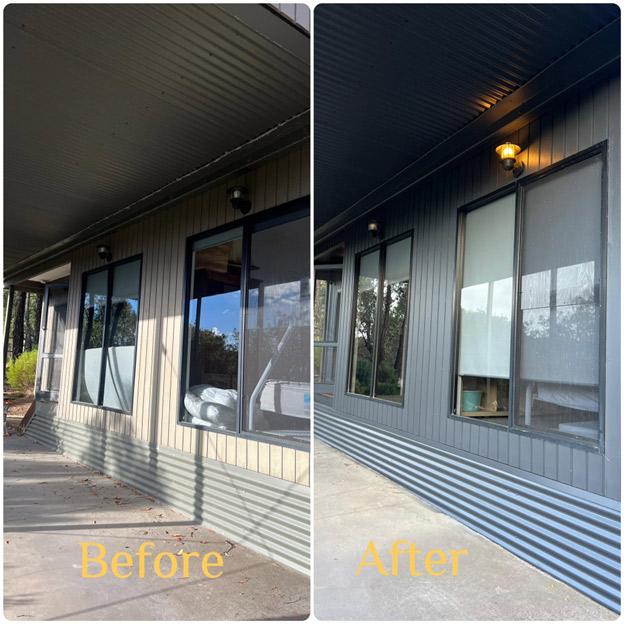
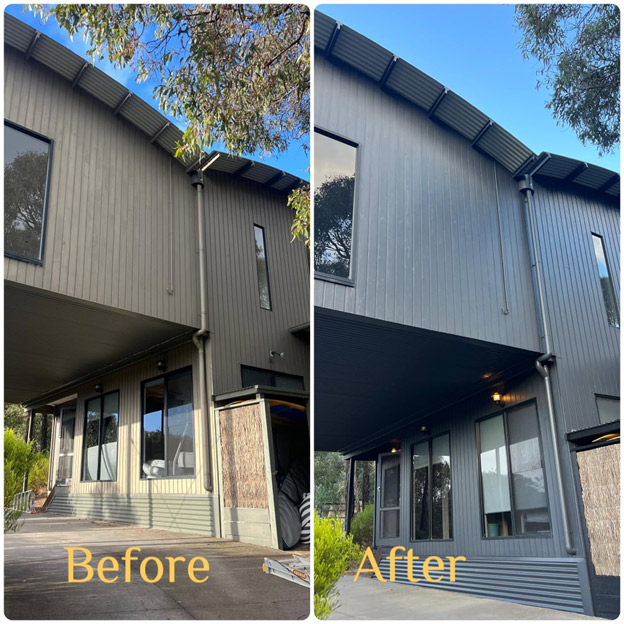
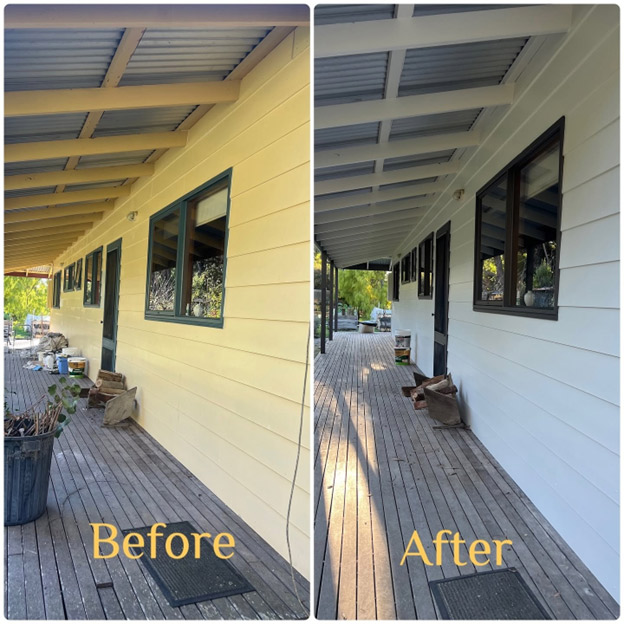
Exterior Painting Before & After - Recent Work
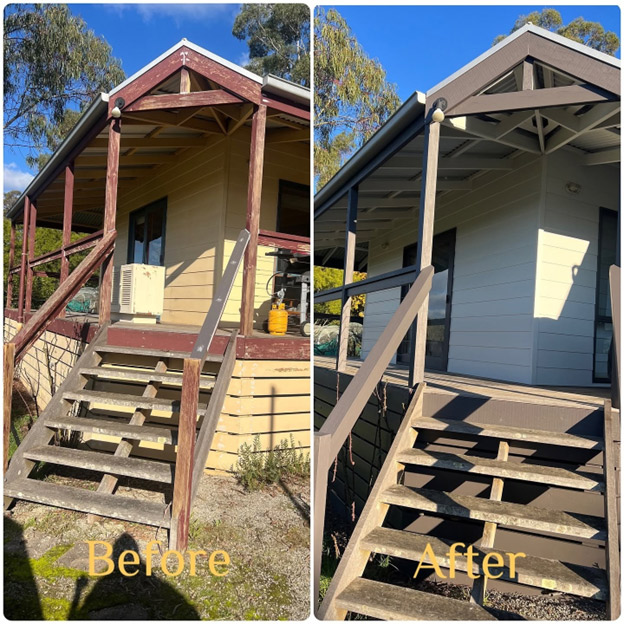
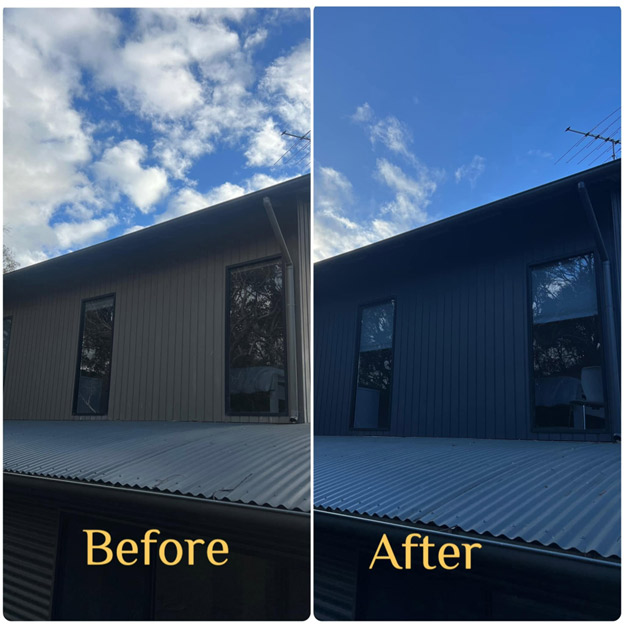
Common Exterior Paint Failures in Newtown Homes
Most exterior paint problems are preparation failures, not product failures. Here are the issues we diagnose most frequently on Newtown homes – cause, consequence, and correct fix.
Peeling Paint on Weatherboards
Why it happens: Poor preparation, moisture or failing previous coatings.
How Fairhaven Painting fixes it:
We remove loose paint, prepare the surface properly, prime exposed areas and apply premium exterior coatings for a durable, long-lasting finish.
Cracked Paint & Weatherboards
Why it happens: Timber naturally expands and contracts with changing weather, causing rigid paint to crack.
How Fairhaven Painting fixes it:
We repair damaged areas, seal gaps with flexible exterior fillers and apply premium paint systems designed to move with your home's exterior.
Faded & Chalking Paint
Why it happens: Years of UV exposure gradually break down exterior paint, leaving surfaces dull and powdery.
How Fairhaven Painting fixes it:
We thoroughly prepare the surface and apply premium UV-resistant Dulux and Haymes paint systems that maintain their colour and protect your home for years.
Mould & Mildew Growth
Why it happens: Moisture and shaded areas encourage mould to develop beneath old paint.
How Fairhaven Painting fixes it:
We treat mould before painting, prepare the affected surfaces correctly and apply mould-resistant coatings to help prevent it from returning.
Rusting Fascias and Gutters
Why it happens: Damaged coatings expose metal surfaces to moisture, leading to corrosion.
How Fairhaven Painting fixes it:
We remove surface rust, apply rust-inhibiting primers and finish with durable metal coatings for long-term protection.
Blistering & Bubbling Paint
Why it happens: Paint applied over damp surfaces or without proper preparation loses adhesion.
How Fairhaven Painting fixes it:
We identify the cause, remove failed coatings, prepare the surface correctly and repaint under suitable weather conditions for lasting performance.
Timber Rot & Deterioration
Why it happens: Long-term moisture exposure can cause timber to deteriorate beneath failing paint.
How Fairhaven Painting fixes it:
We inspect all exterior timber during our assessment, recommend repairs where required and prepare sound surfaces before applying premium exterior paint systems.
When to Book Your Exterior Painting in Newtown

Spring
Sep – Nov
Mild temperatures, manageable rainfall, and enough daylight for larger jobs. Paint cures well. The best window for exterior work in Geelong - and the most in-demand. Book early.
Summer
Dec – Feb
Good conditions but care required. We avoid painting in direct sun above 35°C - paint skins too fast and won't cure correctly. Long days and dry weather are ideal for shaded or south-facing work.

Autumn
Mar – May
Still warm enough for proper curing, humidity is manageable, and availability is better than spring. Ideal for getting exterior work done before winter moisture sets in.

Winter
Jun – Aug
Exterior painting not recommended. Paint won't cure below 10°C, and Geelong's winter moisture causes adhesion problems. Use this time for interior painting and lock in your spring exterior booking.
Rain hold-off rule: We require exterior surfaces to be fully dry before painting - typically 24 to 48 hours after rain, depending on temperature and sun exposure. We will reschedule rather than paint in wrong conditions. Painting on damp surfaces traps moisture under the paint film, which causes blistering and premature adhesion failure.
Exterior Colour Advice for Newtown Homes
Choosing the right exterior colour can dramatically improve your home’s street appeal and long-term value. Whether you’re updating a weatherboard home, refreshing a rendered property, or preparing a house for sale, we provide practical colour recommendations based on your home’s style, surroundings, and maintenance requirements.
We work with premium Dulux and Haymes colour ranges and can help you select colours that complement your property while performing well in Geelong’s climate.
Need inspiration? Read our guide on Best Exterior House Colours for Geelong Homes for popular colour combinations, heritage palettes, and modern exterior trends.
Exterior Painting FAQs - Newtown Homeowners
How long does exterior paint last on a Newtown home?
With proper preparation and premium paint systems, exterior paint on Newtown homes typically lasts 8 to 12 years. Budget jobs that skip oil-based primer or rush preparation commonly fail within 2 to 4 years – particularly on north and west-facing weatherboard elevations exposed to Geelong’s UV and westerly winds.
How many coats does an exterior house need?
Most exterior repaints require one coat of primer on bare areas plus two topcoats for adequate coverage and durability. Heritage homes with decorative detail, homes with significant peeling, or colour changes from dark to light may require three coats. We specify the correct number at the quoting stage based on the condition of your home.
Do you paint exteriors in winter in Geelong?
What causes exterior paint to peel on Newtown weatherboard homes?
Peeling on Newtown weatherboard homes is almost always a preparation failure. The most common cause is applying acrylic primer – or no primer at all – to bare timber before topcoating. Oil-based primer is non-negotiable on bare weatherboard. It penetrates the grain, seals against moisture, and provides a stable base. Other contributors include skipping flexible caulk at board joins, painting on a damp surface, and using rigid filler at points where the timber moves.
Do you pressure wash before exterior painting?
Yes – every exterior job begins with a thorough pressure wash to remove chalk, dirt, mould spores, cobwebs, and surface contamination. After pressure washing we allow full drying time (24 to 48 hours depending on conditions) before any preparation or painting work begins. Painting over a surface that hasn’t fully dried is a common cause of blistering.
What is the best exterior paint for weatherboard homes in Geelong?
Dulux Weathershield and Haymes Solashield are our primary specifications for weatherboard homes in the Geelong region. Both are high-build flexible acrylic formulations with UV stabilisers suited to Geelong’s intense summer sun and the seasonal movement of timber weatherboard. Critically, the paint is only one part of the system – oil-based primer on all bare timber is non-negotiable regardless of the topcoat chosen.
How do you treat mould before exterior painting?
Mould on exterior surfaces is treated with a biocide wash that kills active spores at the source. After treatment the surface is rinsed thoroughly and allowed to dry fully before any priming or painting. We then apply a mould-resistant primer before the topcoat. Painting over active mould without treatment guarantees its return – typically within six months.
How long after rain can you paint an exterior?
We require exterior surfaces to be fully dry before painting – typically 24 to 48 hours after rain, depending on temperature, wind, and sun exposure. We will reschedule rather than paint on damp surfaces. Painting on a surface that retains moisture traps water under the paint film, causing blistering and premature adhesion failure.